
7 Best Brain.fm Alternatives for Focus Music in 2026
Looking for a Brain.fm alternative? We compared free and paid focus music apps on pricing, features, music quality, and real-world focus impact.
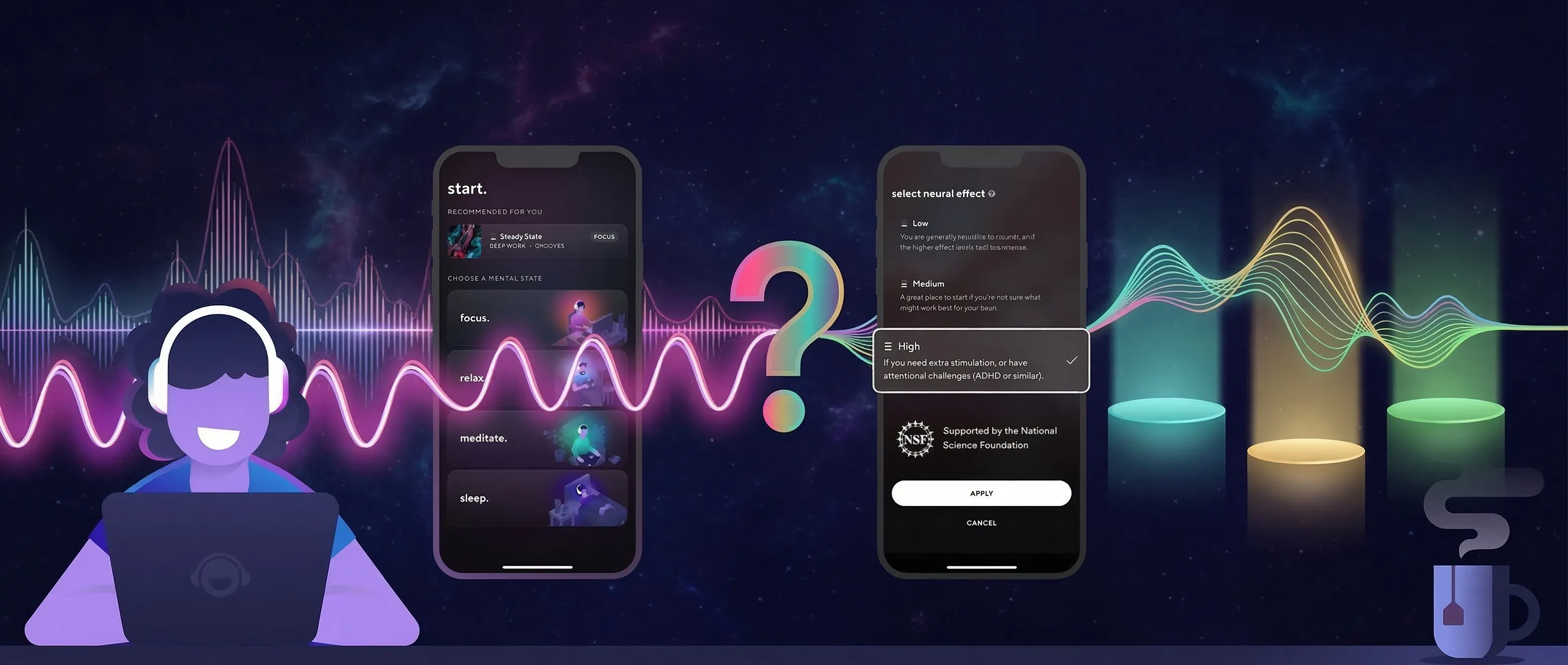
Brain.fm built the category. It adds a layer of science (what it calls neural phase locking) to human-composed music, and it helped people discover that the right sound can genuinely change how they work.
But Brain.fm isn't perfect, and it isn't cheap. At roughly $15/month (or $100/year), plenty of people are looking for alternatives that deliver the same focus benefits with a different approach, better pricing, or features Brain.fm doesn't offer.
We tested the major options across real work sessions. Here's what's actually worth trying.
Quick comparison
Prices as of September 2026.
| App | Price | What you get | Best for |
|---|---|---|---|
| Endel | $6.99/mo | AI soundscapes, adapts to biometrics | Cross-platform, Brain.fm-like |
| Omix | $7.99/mo | Real adaptive music, activity-based | Deep work at a desk |
| Focus@Will | $4.99/mo | Curated channels, neuroscience-backed | Pick a channel and go |
| Noisli | Free, or $10/mo billed yearly | Mixable ambient sounds | Custom soundscapes |
| Flocus | $9/mo | Dashboard + ambient sounds | All-in-one workspace |
| myNoise | Free | Hundreds of sound generators | Audiophile-level control |
| Spotify | $12.99/mo | Playlists you already have | No extra cost |
Is Brain.fm free?
No. Brain.fm has a 14-day free trial, then costs $14.99/month or $99.99/year. There's no free plan.
If you want something free, you have real options, but none of them work the way Brain.fm does:
- myNoise is donation-based, with hundreds of high-quality sound generators in your browser.
- NSDR.co is completely free with no account. Its Focus Mode plays binaural beats over lofi music.
- Noisli has a free plan with 16 sounds, capped at 1.5 hours a day.
- Flocus has a usable free tier that pairs ambient sounds with a timer and task list.
- Spotify and YouTube have free focus playlists, with ads.
Free tools give you sound, but you do the work of picking and adjusting it. If you'd rather have audio that responds on its own, most paid apps offer a trial, including Omix (7 days, no credit card). The free options are covered in more detail below.
1. Endel - AI soundscapes that adapt to your context
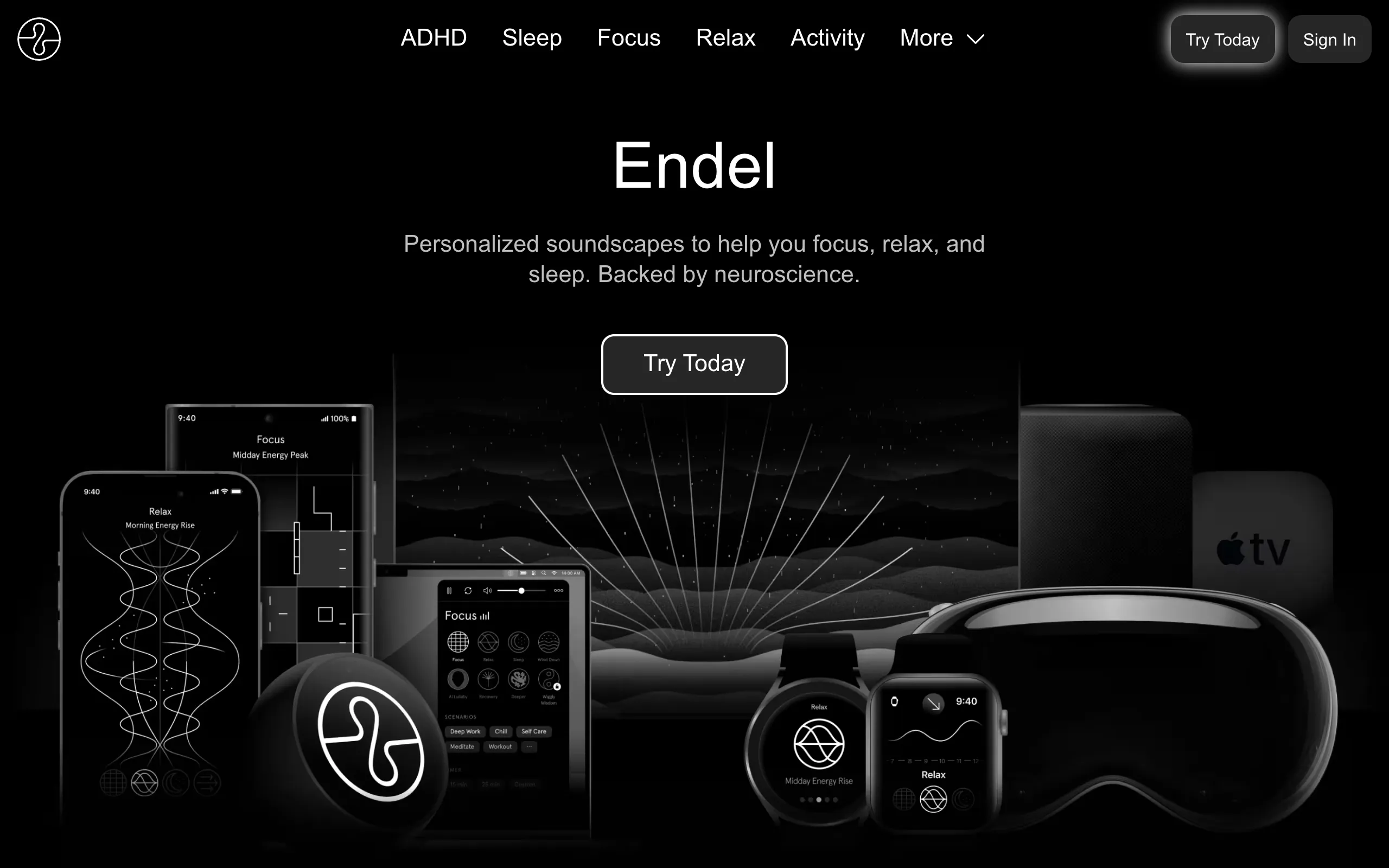
Price: $6.99/month, $39.99/year, or $249.99 lifetime on Endel's website (App Store prices differ)
Endel is probably Brain.fm's most direct competitor. It generates real-time soundscapes using AI, adapting to inputs like time of day, weather, heart rate (with Apple Watch), and your location. The result is a continuous, never-repeating audio environment designed for focus, relaxation, or sleep.
What it does well:
- Cross-platform with native apps on iOS, Android, Mac, Windows, Apple Watch, and web
- Integrates with health data for genuinely personalized audio
- Clean, minimal interface that stays out of your way
- Partnership-driven content (Apple Music integration, artist collaborations)
Where it falls short:
- The audio is algorithmic - it sounds more like ambient textures than actual music
- No desktop activity tracking - it reacts to biometrics and environment, not your workflow
- The "focus" mode can feel monotonous after 2-3 hours
- Limited genre variety (ambient/electronic only)
Bottom line: Endel is the best alternative if you want something that feels similar to Brain.fm but with more personalization signals. It won't give you actual music, though - it's closer to an evolving soundscape. For a deeper comparison, see our Omix vs Endel breakdown. And if you're weighing Endel against other options too, our Endel alternatives roundup covers free apps and apps for sleep.
2. Omix - composed music that adapts to your typing
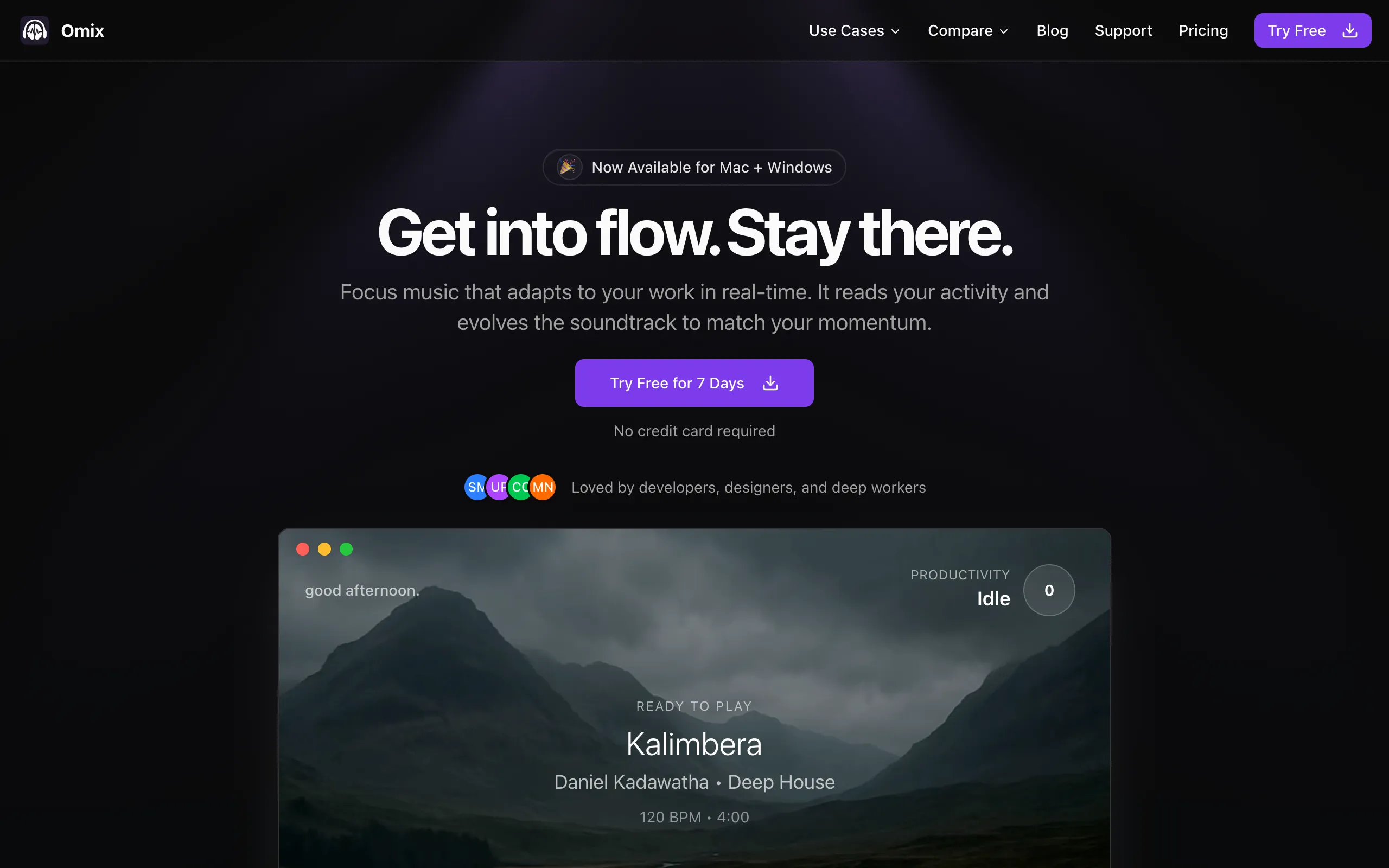
Price: $7.99/month, $59/year, or $119 lifetime Full disclosure: this is our app.
Omix takes a fundamentally different approach from Brain.fm and Endel. Brain.fm plays the mode and intensity you pick, and Endel generates soundscapes from your surroundings. Omix plays composed music (deep house, jazz fusion, lofi beats, post-rock, and dark techno) that builds and evolves based on your actual keyboard and mouse activity.
When you're typing fast, basslines drop in, melodies emerge, and the energy builds. When you pause or slow down, the music fades to ambient textures. It's less "scientifically designed audio" and more "a soundtrack that mirrors your work session."
What it does well:
- Composed music split into stems, so the arrangement changes as you work instead of playing a fixed track
- Activity-based adaptation - no other focus app does this
- Native Mac and Windows app with a tiny footprint
- Built-in focus analytics (tracks your productive hours, per-app breakdown)
- Ambient background sounds (rain, café, brown noise) layer beneath the music
- No lyrics across the entire catalog
Where it falls short:
- Desktop only - no mobile app yet
- Five genres (deep house, lofi, jazz fusion, post-rock, dark techno)
- No biometric integration - relies on keyboard/mouse activity
- Newer app with a smaller catalog than Brain.fm
Bottom line: If you do your deep work at a computer and you want music that follows how you're working instead of playing the same way throughout, Omix is the most interesting alternative in this space. The activity-based adaptation creates a feedback loop that other apps can't replicate. We wrote a detailed Omix vs Brain.fm comparison if you want the full breakdown.
3. Focus@Will (now focus.music) - curated focus channels
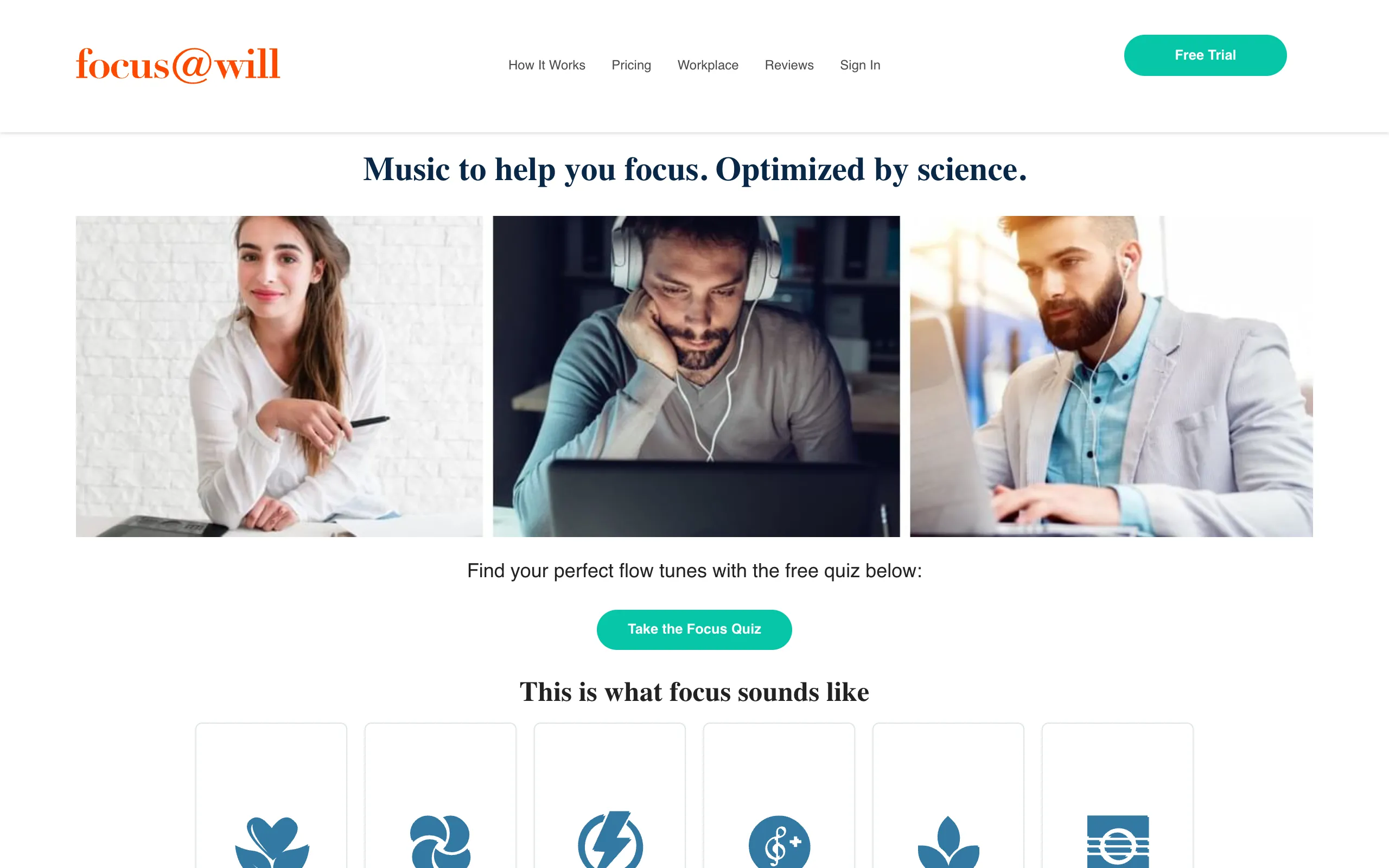
Price: $4.99/month or $39.99/year, with a 7-day free trial
Focus@Will is now called focus.music, and existing accounts carry over. It grew out of Focus@Will's long-running research into music and focus, and it takes a more traditional approach than Brain.fm: channels of human-composed, instrumental music at different energy levels, played in timed or free-flow focus sessions.
In guided mode, you name the task you're working on and it suggests a channel. focus.music says its Adaptive Runtime learns which channels hold your attention and when you focus best, then tunes future sessions to you. You can also browse the channels and pick one yourself.
What it does well:
- Human-composed music with no vocals and no AI-generated audio
- Guided suggestions that learn from your sessions, or manual channel picks
- Timed sessions (25 minutes, 50 minutes, or custom) for focused work sprints
- Apps for Mac, Windows, iPhone, iPad, and Android, plus a web player
- The lowest monthly price of the paid subscriptions on this list
Where it falls short:
- Personalization comes from your session history, not from what you're doing at the keyboard
- You can try a session without an account, but unlimited listening needs a subscription
- No lifetime option listed
Bottom line: focus.music is a solid pick if you want inexpensive, human-composed focus music on every device and you like working in timed sessions. Good for people who want to pick a channel and go.
4. Noisli - build your own soundscape
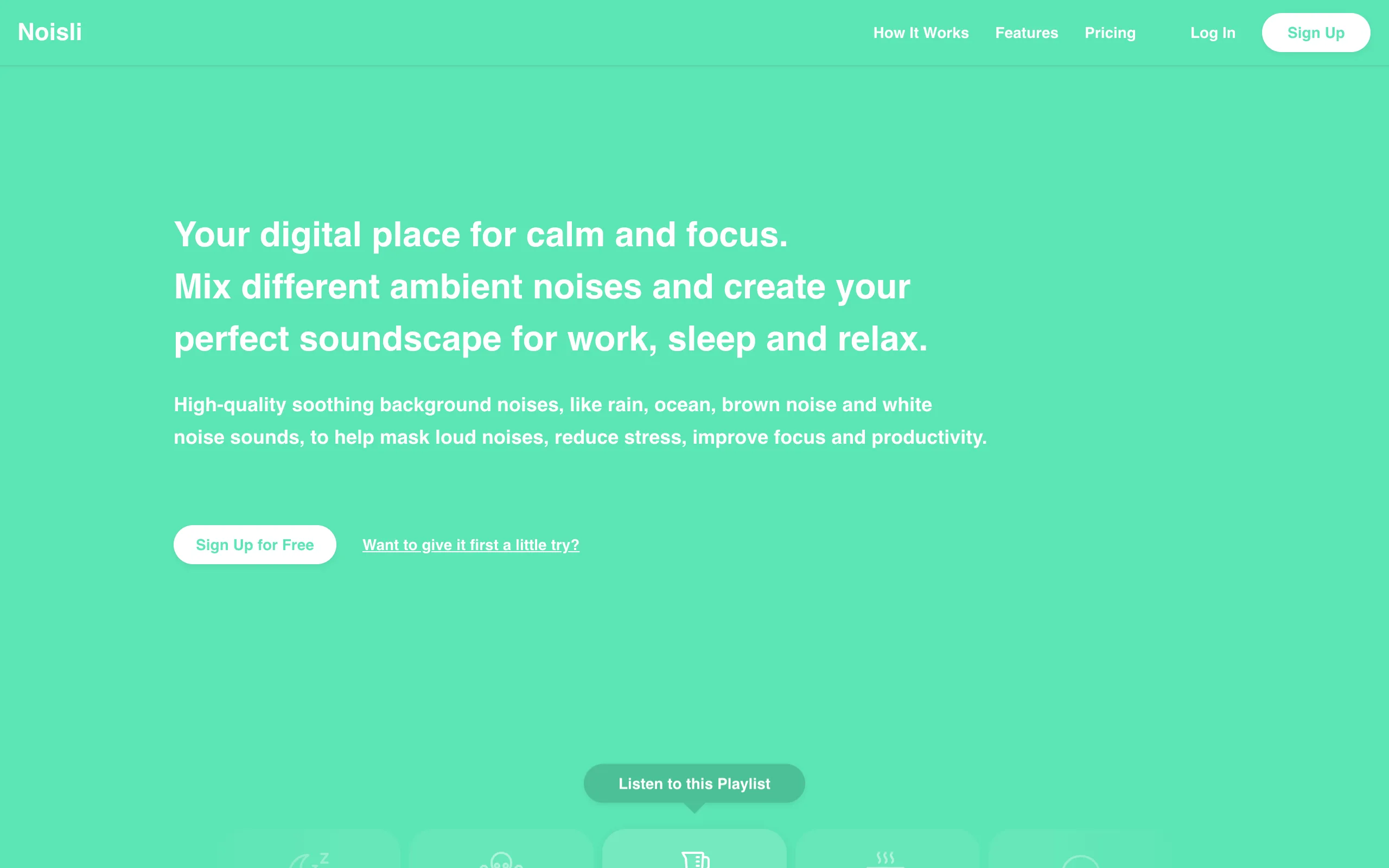
Price: Free plan, or Pro at $10/month billed yearly
Noisli is less about music and more about ambient sound design. It gives you a set of high-quality sounds (rain, thunder, wind, café noise, white/pink/brown noise, etc.) and lets you mix them at whatever levels you want. Save your favorite combinations as presets and recall them whenever you need to focus.
What it does well:
- Dead simple to use - just sliders and icons
- High-quality ambient sounds
- Save and share custom mixes
- Built-in text editor for distraction-free writing
- Chrome extension for quick access
Where it falls short:
- No music - this is strictly ambient noise
- $10/month (billed yearly) feels steep for a sound mixer with no adaptive features
- Limited to 1.5 hours/day on the free tier
- No adaptive features - you set it manually and it stays static
Bottom line: Noisli is great if ambient sound is all you need and you don't want music at all. But at $10/month with no adaptive features, Pro is hard to justify when free alternatives like myNoise exist.
5. Flocus - productivity dashboard with ambient sounds
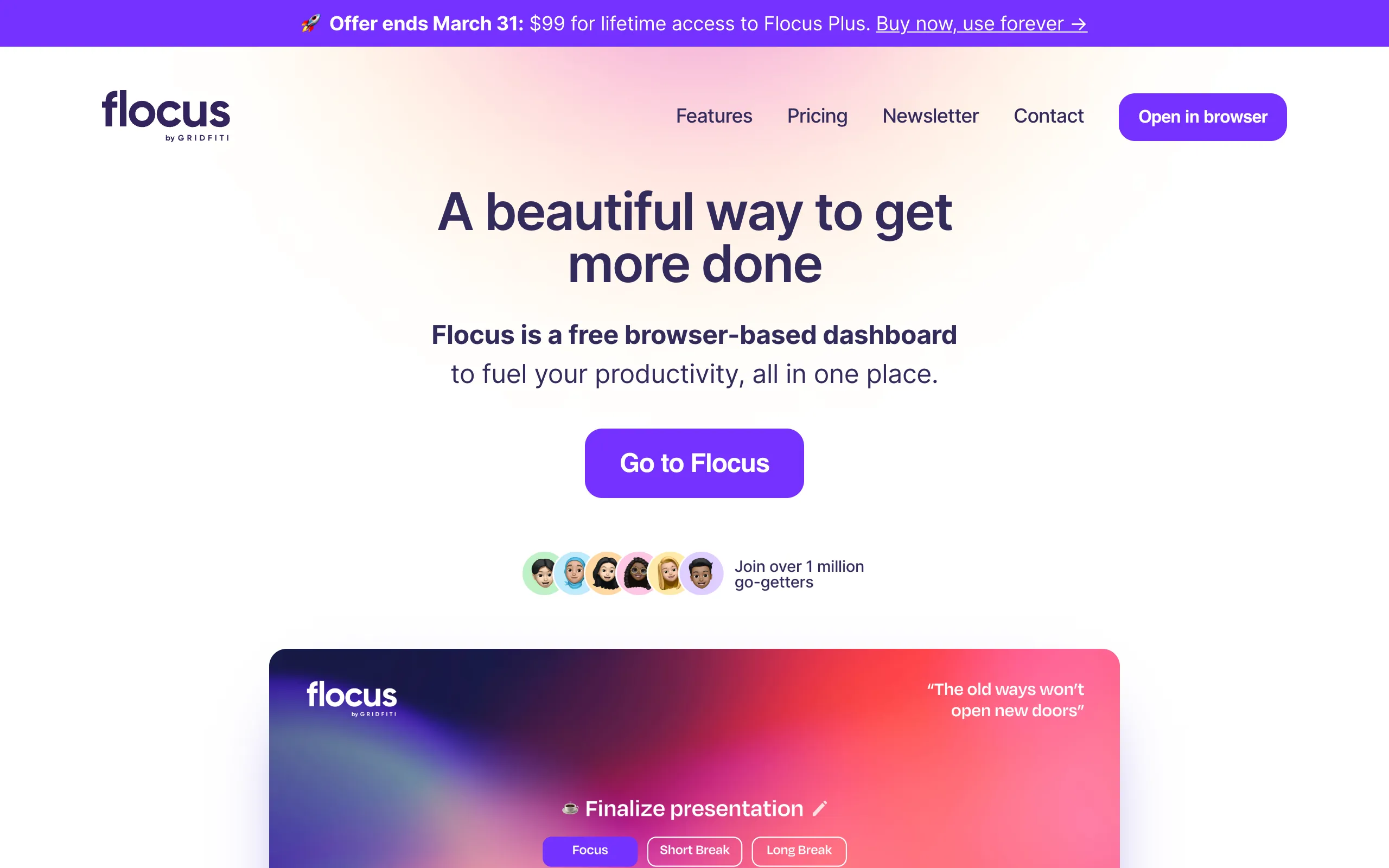
Price: Free with a $9/month Pro tier
Flocus isn't really a focus music app - it's a productivity dashboard that includes ambient soundscapes. Think of it as a browser-based workspace with a Pomodoro timer, task list, and layerable background sounds built in.
What it does well:
- Free tier is genuinely usable
- Beautiful customizable themes
- Combines focus sounds with productivity tools (timer, tasks)
- Layerable soundscapes with lots of options
Where it falls short:
- The audio is ambient sounds, not composed music
- Browser-based - another tab competing for attention
- Jack of all trades, master of none
- No adaptive features
Bottom line: Flocus is best if you want an aesthetic workspace with ambient sounds baked in. It won't replace Brain.fm for the audio quality, but the free tier and integrated tools make it worth trying.
6. myNoise - the audiophile's choice (free)
Price: Free (donation-based)
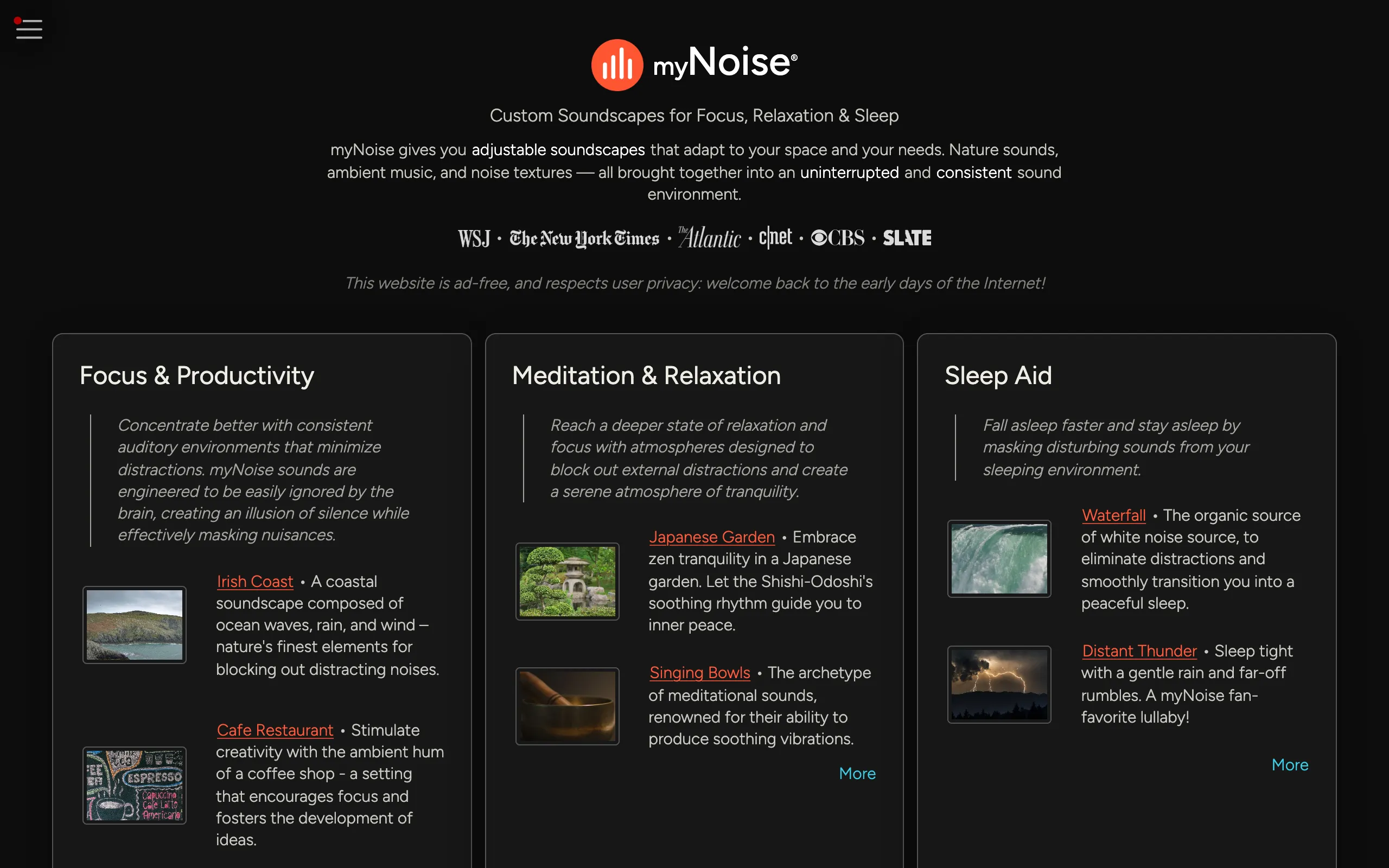
myNoise is a passion project by audio engineer Stéphane Pigeon, and it shows. The site offers hundreds of meticulously recorded and calibrated sound generators - from Japanese gardens to Gregorian chants to synthesizer drones. Each generator has adjustable frequency sliders and dozens of presets.
What it does well:
- Hundreds of incredibly high-quality sound generators
- Deeply customizable - adjust individual frequency bands
- Completely free (donations unlock extras)
- The calibration feature adjusts for your hearing profile
- Animation mode creates evolving, non-repetitive soundscapes
Where it falls short:
- The interface is functional but dated
- Overwhelming number of options (paradox of choice)
- Full access in the iOS and Android apps is a one-time $19.99 purchase
- No music - only ambient/noise generators
- No productivity features or tracking
Bottom line: If you care about audio quality and customization above all else, myNoise is unbeatable - and it's free. But it requires more manual setup than most people want, and it's strictly sound generation, not music.
7. Spotify or YouTube playlists - the obvious option
Price: Free with ads, or $12.99/month for Spotify Premium
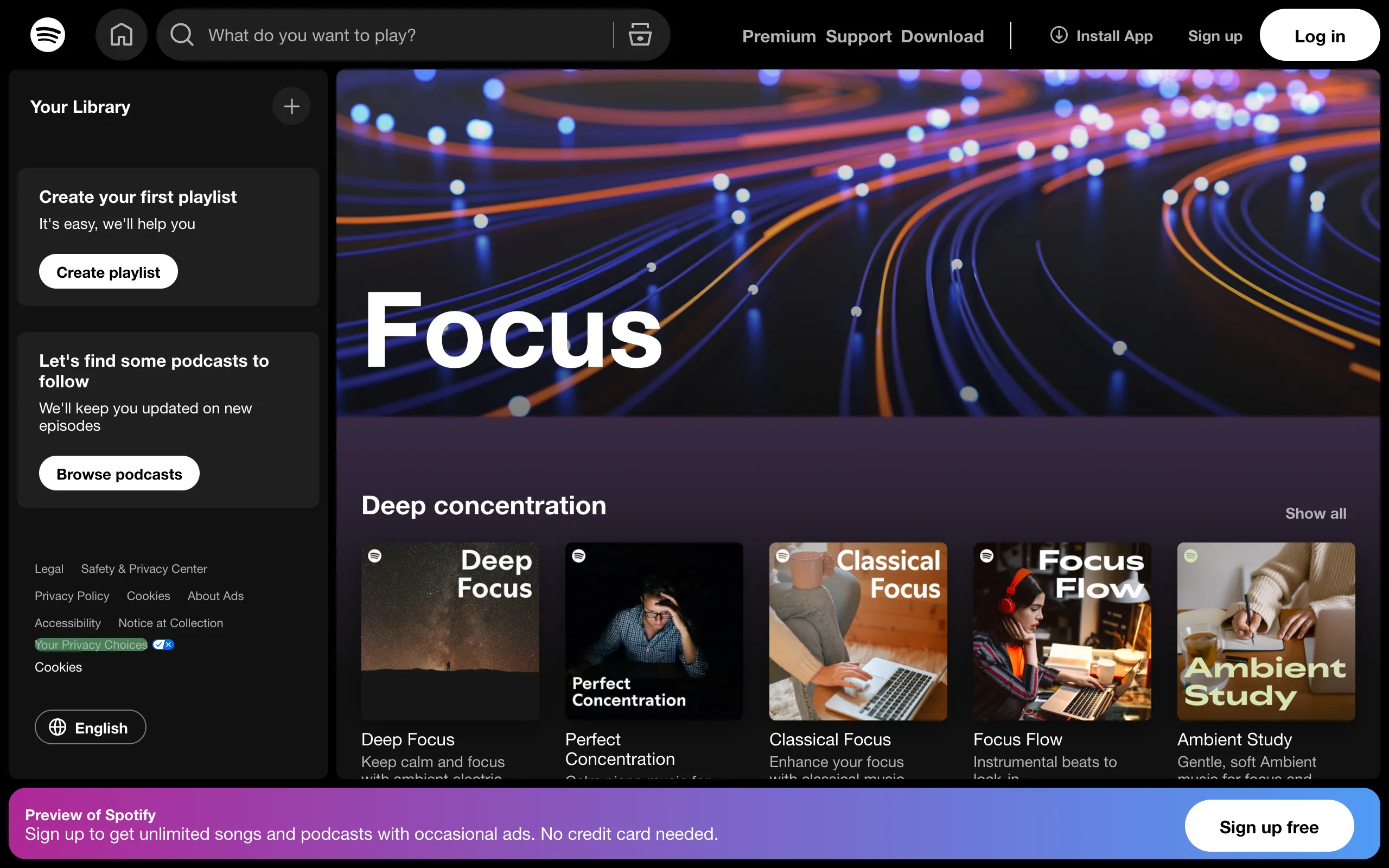
Before spending money on a dedicated focus app, it's worth asking: does a Spotify "Deep Focus" playlist do the job?
Some people make it work. Streaming platforms have massive catalogs of instrumental and ambient music. But most people find that static playlists lose their effectiveness over time, especially the lofi and ambient playlists that dominate Spotify's focus category.
What it does well:
- You probably already pay for it
- Enormous music libraries with every genre
- Community-curated playlists (some are excellent)
- Works on every device
Where it falls short:
- No scientific design behind the playlists
- You end up playlist-hopping instead of working
- Shuffle can serve up distracting tracks
- Ads on free tiers are focus-killers
- No adaptive features - the music doesn't respond to you at all
Bottom line: If you can find a playlist you like and actually stick with it, Spotify works fine. The problem is most people can't - they spend more time browsing than working. Dedicated focus apps exist specifically because streaming playlists didn't solve the problem. We wrote a longer take on Omix vs Spotify if you're on the fence.
How to choose
The right Brain.fm alternative depends on what you actually need:
- You want something similar to Brain.fm: Go with Endel. It's the closest in philosophy (science-backed audio with modes for focus, relaxation, and sleep) with better cross-platform support and lower pricing. Our Brain.fm vs Endel comparison puts the two head to head.
- You want music that responds to how you work: Try Omix. It's the only app that pairs composed music with real-time activity-based adaptation. Best if your deep work happens at a desk. (Also works great for ADHD focus.)
- You want curated focus channels for less: Focus@Will, now focus.music, has a long track record and costs $4.99/month.
- You just need ambient noise: myNoise is free and the quality is unmatched. Noisli is simpler but costs more.
- You want an all-in-one workspace: Flocus combines ambient sounds with productivity tools at a great price.
- You don't want to pay anything new: Try a dedicated Spotify focus playlist first. If you find yourself constantly switching tracks, that's your signal to try a dedicated app.
Thinking about making the switch? Try Omix free for 7 days - no credit card required. Lifetime access is $119 while the founder's deal lasts.
Ready to boost your focus?
Try Omix free and discover adaptive focus music that responds to how you work.