
7 Focus@Will (focus.music) Alternatives in 2026, Free and Paid
Focus@Will is now focus.music. We compared 7 alternatives on price, platform and sound, from free picks like myNoise to Brain.fm, Endel and Omix.
Focus@Will was one of the first apps built around the idea that the right music can help you concentrate. It's now called focus.music, and existing accounts carry over. It plays channels of human-composed, instrumental music at different energy levels, in timed or free-flow focus sessions, and it says its Adaptive Runtime learns which channels hold your attention.
It's also one of the cheaper focus apps, at $4.99/month or $39.99/year. So people usually look elsewhere for reasons other than price: they want a different kind of sound, audio that reacts while they work, a free option, or a lifetime plan instead of a subscription.
Here's how the main alternatives compare.
Quick comparison
Prices as of November 2026.
| App | Price | What you get | Best for |
|---|---|---|---|
| Brain.fm | $14.99/mo or $99.99/yr | Composed music with a science layer | Research-backed focus music |
| Omix | $7.99/mo, $59/yr, or $119 lifetime | Real adaptive music, activity-based | Deep work at a desk |
| Endel | Free edition, or paid plans in the app | AI soundscapes, adapts to your context | Focus, relaxation and sleep |
| Noisli | Free, or $10/mo billed yearly | Mixable ambient sounds | Custom soundscapes |
| Flocus | Free, or Plus from $5/mo billed yearly | Dashboard + ambient sounds | All-in-one workspace |
| myNoise | Free on the web | Hundreds of sound generators | Audiophile-level control |
| Spotify | Free with ads, or $12.99/mo | Playlists you already have | No extra cost |
Is focus.music free?
Not really. You can try a session without an account, and every plan starts with a 7-day free trial. After that, unlimited listening costs $4.99/month or $39.99/year. There's no lifetime option listed.
If you want something free, these are the real options:
- myNoise is donation-based, with hundreds of high-quality sound generators in your browser.
- NSDR.co is completely free, and its Focus Mode plays binaural beats over lofi music with no account needed.
- Endel has a free edition with no time limit, though it has fewer soundscapes and no background playback.
- Noisli has a free plan with 16 sounds, capped at 1.5 hours a day.
- Flocus has a limited free plan that pairs ambient sounds with a timer and task list.
- Spotify and YouTube have free focus playlists, with ads.
Free tools give you sound, but most leave the picking and adjusting to you. Paid apps that adapt on their own usually offer a trial, including Omix (7 days, no credit card). Each option is covered below.
1. Brain.fm - human-composed music with a science layer
Price: $14.99/month or $99.99/year, with a 14-day free trial
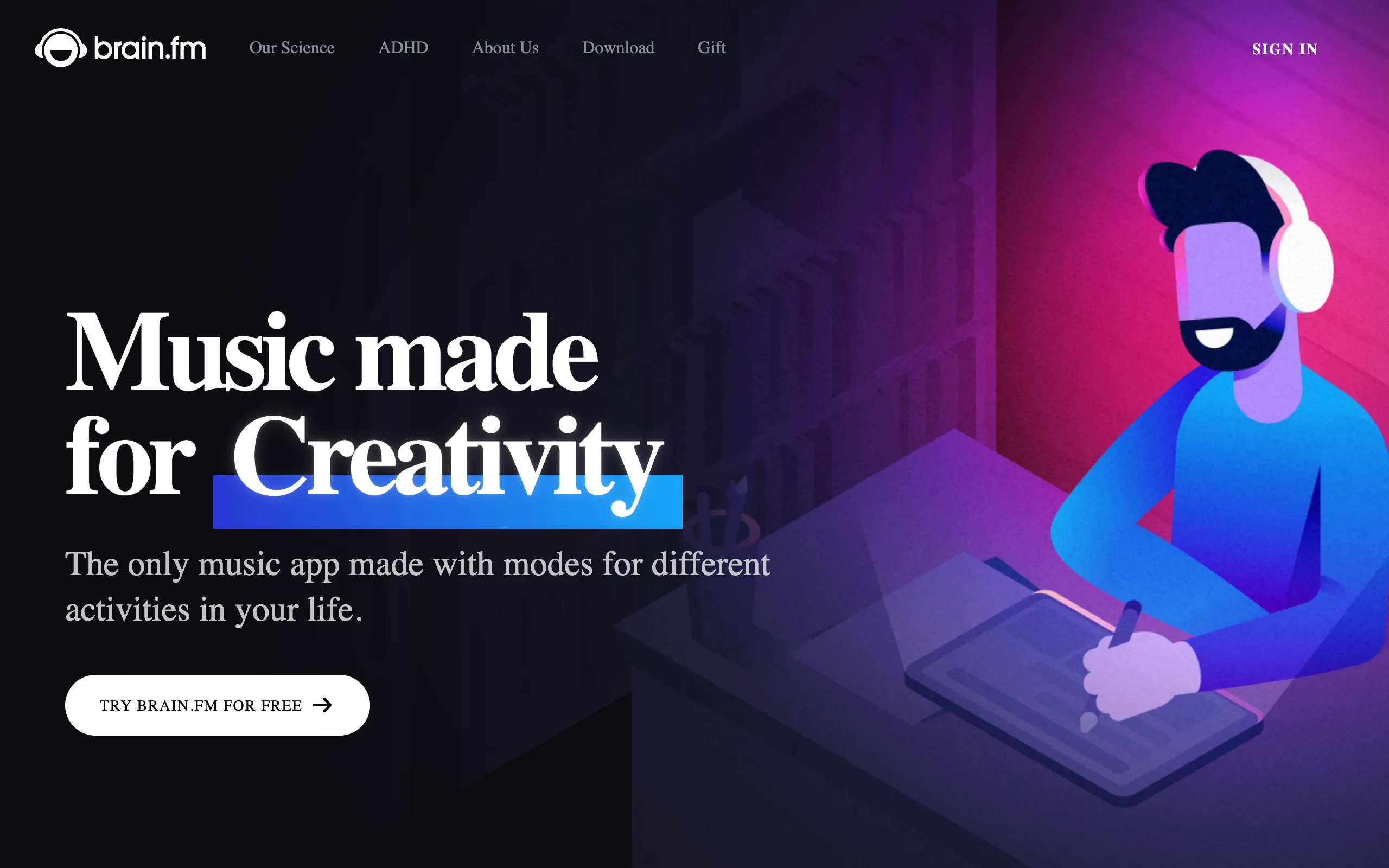
Brain.fm is the closest match to focus.music in spirit. Both play human-composed, instrumental music designed for focus. The difference is the science layer: Brain.fm adds fast amplitude modulation to its music, and it published a peer-reviewed study in Communications Biology (October 2024) on how that music affects sustained attention.
What it does well:
- The strongest published research of any focus audio app
- Clear modes for focus, relaxation, and sleep, with an ADHD setting for focus
- Apps on the web, iOS, Android, and desktop, so you don't lose platforms by switching
Where it falls short:
- At $14.99/month, it costs three times as much as focus.music
- No free plan, only the trial
- It doesn't react to what you're doing. You pick a mode and it plays
Bottom line: Brain.fm is the pick if you liked focus.music's approach and want more research behind the music, and you don't mind paying more for it. For a closer look, see our Brain.fm alternatives roundup.
2. Omix - composed music that adapts to your typing
Price: $7.99/month, $59/year, or $119 lifetime Full disclosure: this is our app.
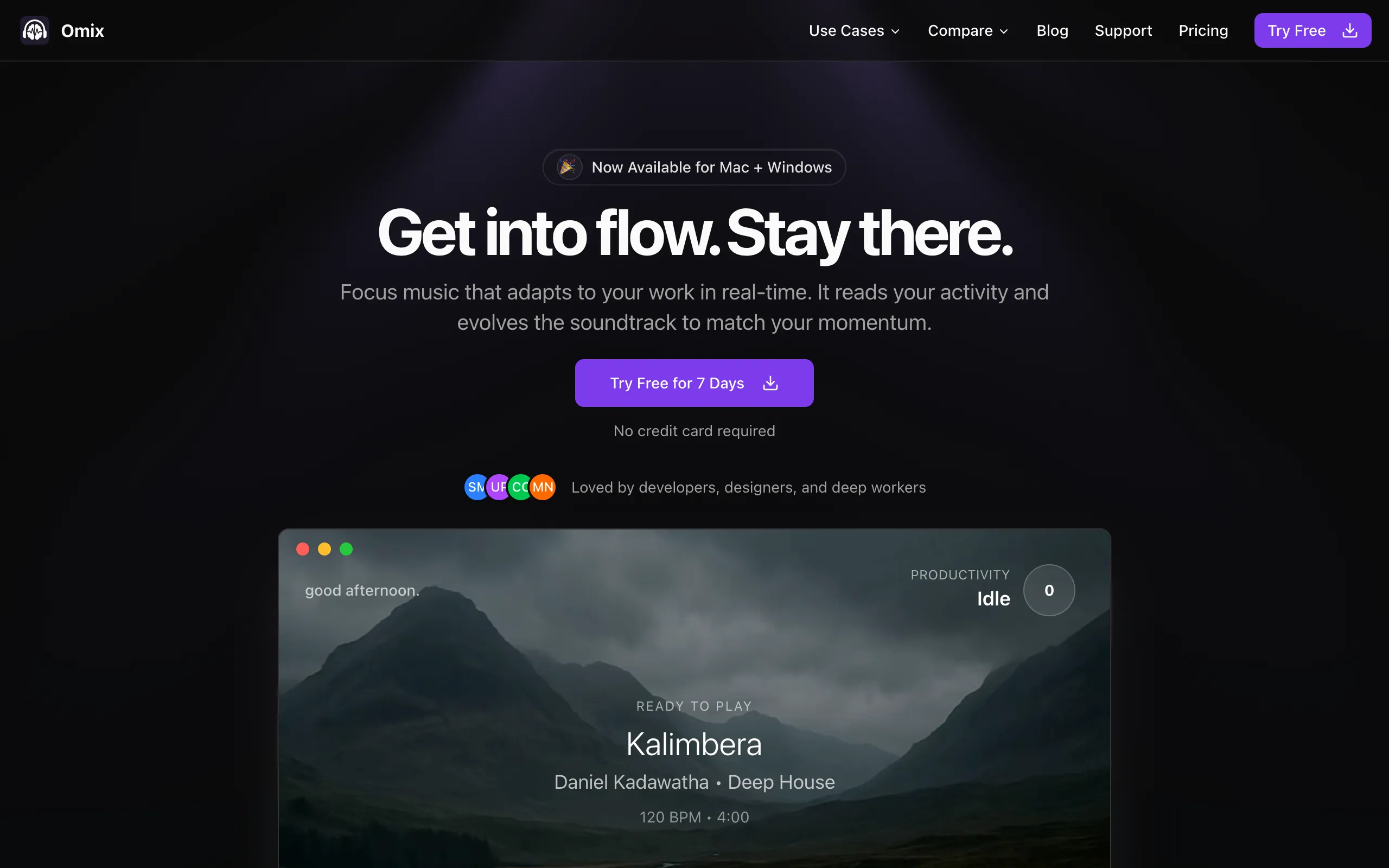
focus.music learns from your past sessions and suggests channels. Omix adapts during the session itself. It plays composed music (deep house, jazz fusion, lofi beats, post-rock, and dark techno) that builds and evolves based on your actual keyboard and mouse activity.
When you're typing fast, basslines drop in, melodies emerge, and the energy builds. When you pause or slow down, the music fades to ambient textures. The music follows how you're working instead of playing the same way throughout.
What it does well:
- Composed music split into stems, so the arrangement changes as you work instead of playing a fixed track
- Activity-based adaptation - no other focus app does this
- Native Mac and Windows app with a tiny footprint
- Built-in focus analytics (tracks your productive hours, per-app breakdown)
- Ambient background sounds (rain, café, brown noise) layer beneath the music
- A lifetime option, which focus.music doesn't offer
Where it falls short:
- Desktop only - no mobile app yet, while focus.music runs on phones too
- Costs more than focus.music on monthly and yearly plans
- Five genres (deep house, lofi, jazz fusion, post-rock, dark techno)
- No timed session modes like focus.music's 25 and 50 minute sessions
Bottom line: If you do your deep work at a computer and you want music that responds to you in the moment, Omix is the most different alternative on this list. If you listen on your phone, it isn't a fit yet. Our Omix vs Focus@Will page has the full side by side.
3. Endel - AI soundscapes that adapt to your context
Price: Free edition, or paid plans sold in the app (Endel's website doesn't list prices)
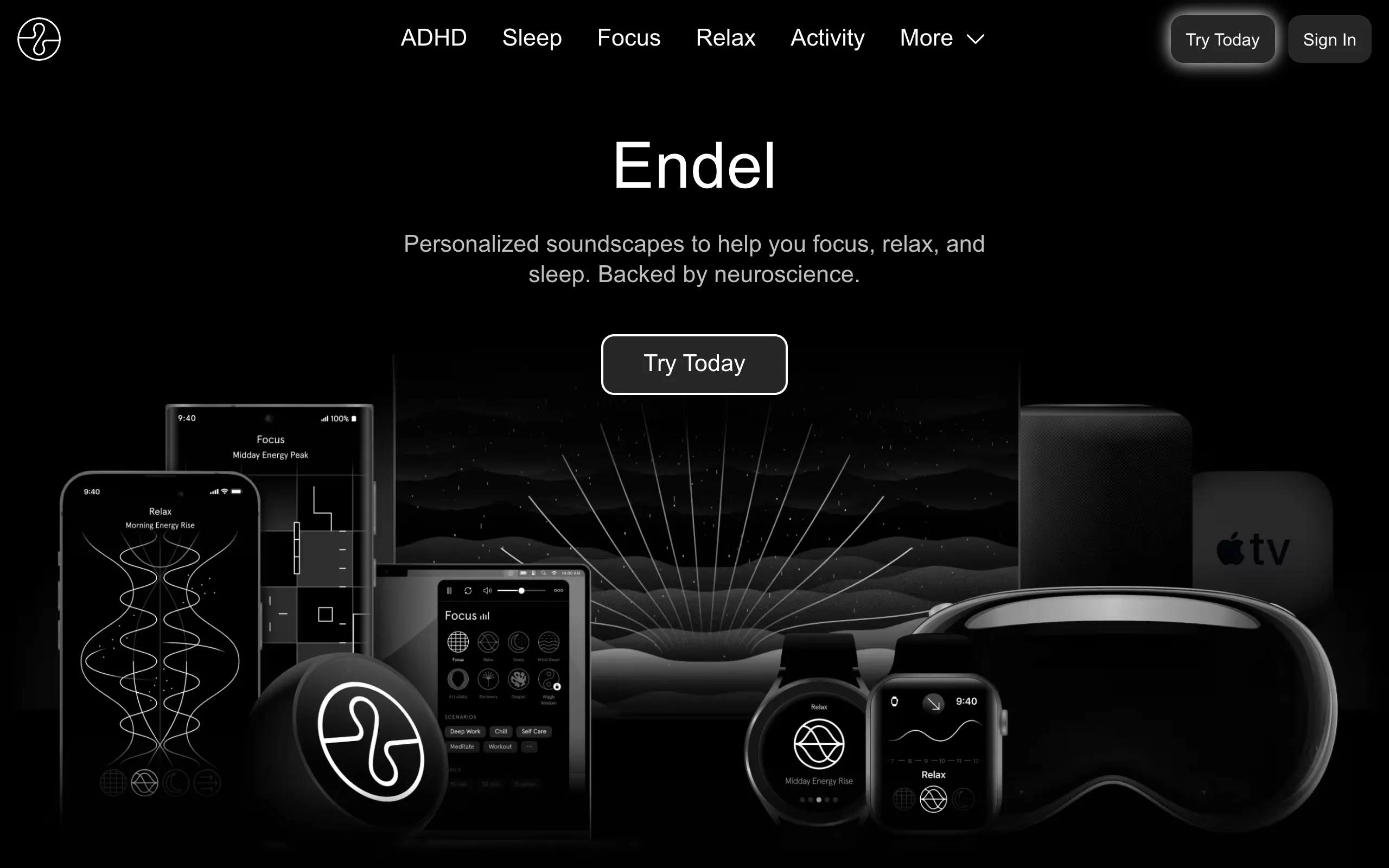
Endel generates soundscapes in real time, adapting to inputs like time of day, weather, heart rate (with an Apple Watch), and your location. It covers focus, relaxation, sleep, and movement, and it runs almost everywhere: iPhone, Android, Apple Watch, Mac, Windows, the web, Alexa, Apple TV, and Fire TV.
Endel sells its plans inside the app. Its US App Store listing shows several monthly and yearly prices plus a lifetime option at $124.99, and yearly plans come with a 7-day free trial.
What it does well:
- A free edition with no time limit
- Adapts to your surroundings and, with an Apple Watch, your heart rate
- Runs on more devices than any other app here
- Timed sessions for specific tasks, plus a binaural beats option
Where it falls short:
- The audio is ambient texture, not composed music, which is a big change if you liked focus.music's channels
- The free edition has fewer soundscapes and no background playback
- It reacts to your environment, not to what you're doing at your desk
- Prices are hard to compare because they're only shown in the app
Bottom line: Endel is the best fit if you want one app for focus, relaxation, and sleep on every device you own. For more options in the same vein, see our Endel alternatives roundup.
4. Noisli - build your own soundscape
Price: Free plan, or Pro at $10/month billed yearly
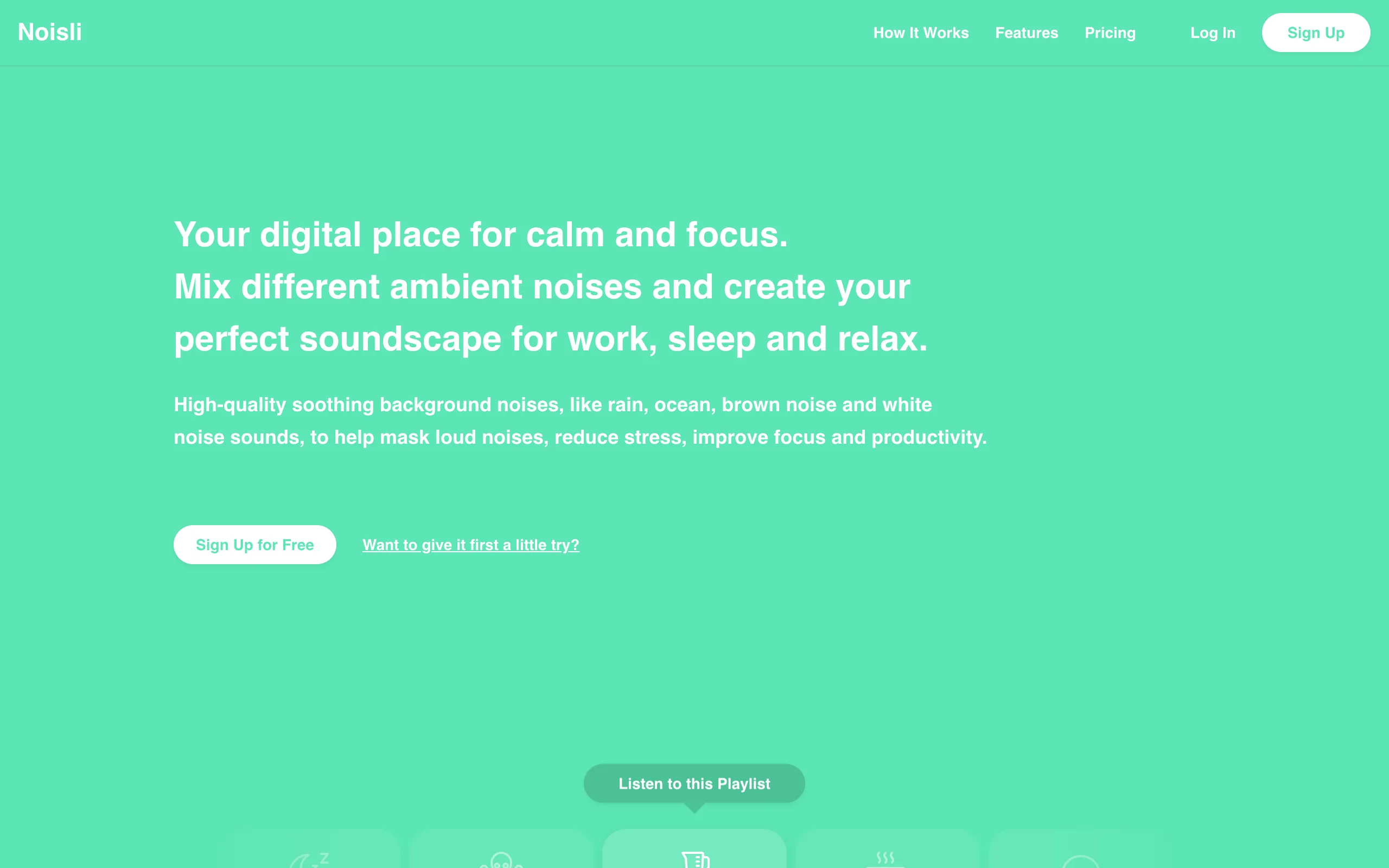
Noisli is less about music and more about ambient sound design. It gives you a set of high-quality sounds (rain, thunder, wind, café noise, white/pink/brown noise, etc.) and lets you mix them at whatever levels you want. Save your favorite combinations as presets and recall them whenever you need to focus.
What it does well:
- Dead simple to use - just sliders and icons
- High-quality ambient sounds
- Save and share custom mixes
- Works on the web, iOS, Android, and as a Chrome extension
Where it falls short:
- No music - this is strictly ambient noise
- Pro costs twice as much as focus.music
- Limited to 1.5 hours/day on the free tier
- No adaptive features - you set it manually and it stays static
Bottom line: Noisli is great if you've realized you prefer ambient sound to music. If you still want music, it isn't a replacement. See Omix vs Noisli for how it compares with an adaptive music app.
5. Flocus - productivity dashboard with ambient sounds
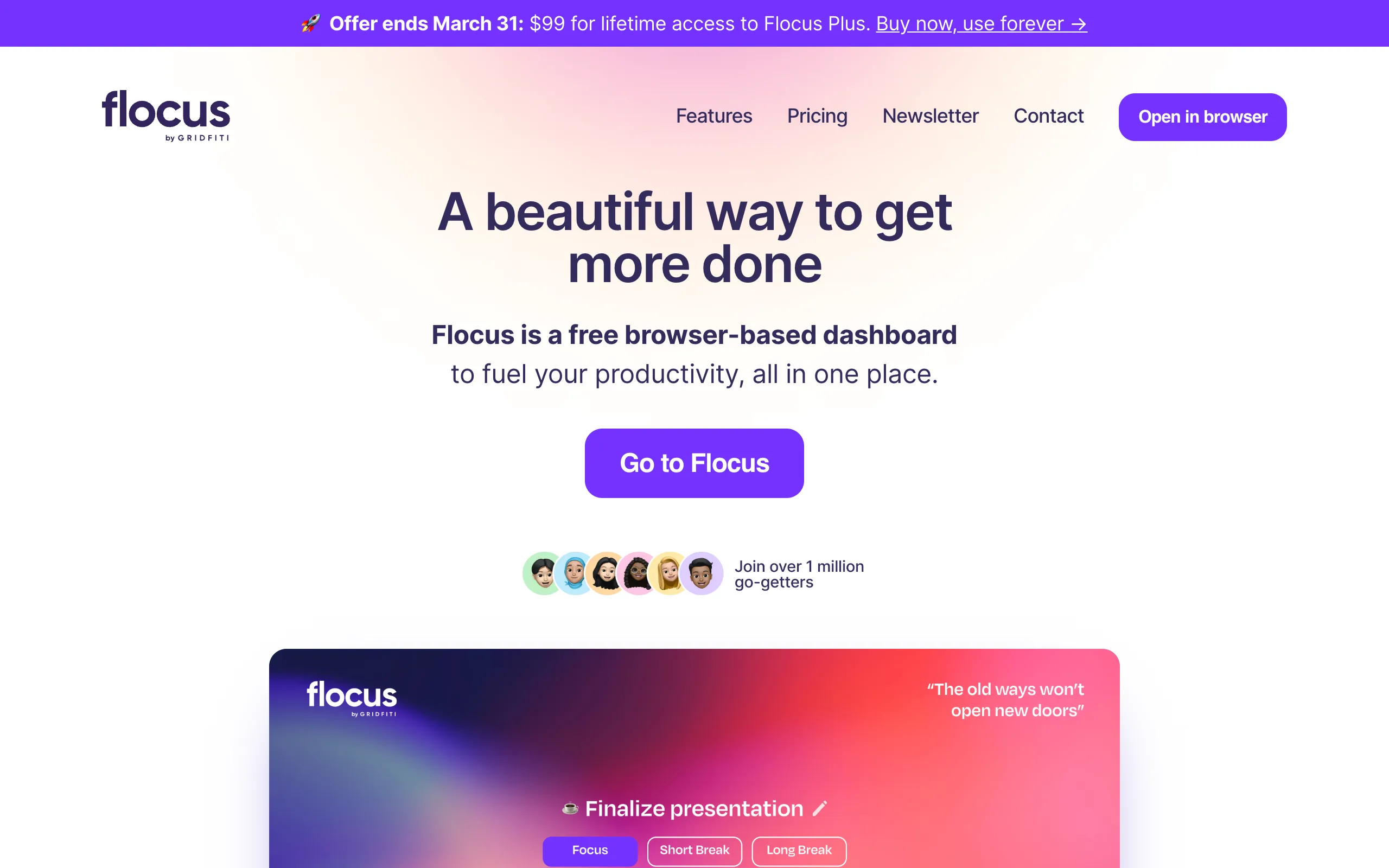
Price: Free plan, or Plus at $9/month (currently $5/month billed yearly as an early-bird price)
Flocus isn't really a focus music app - it's a browser-based workspace with a Pomodoro timer, task list, and layerable background sounds built in. If what you liked about focus.music was its timed sessions, Flocus gives you the timer with more tools around it.
What it does well:
- A free plan to start
- Beautiful customizable themes
- Combines focus sounds with productivity tools (timer, tasks)
- Layerable soundscapes with lots of options
Where it falls short:
- The audio is ambient sounds, not composed music
- Browser only - another tab competing for attention
- The free plan is limited
- No adaptive features
Bottom line: Flocus is best if you want an aesthetic workspace with sounds and a timer in one tab. It won't replace focus.music's music, but it covers the session side well.
6. myNoise - the audiophile's choice (free)
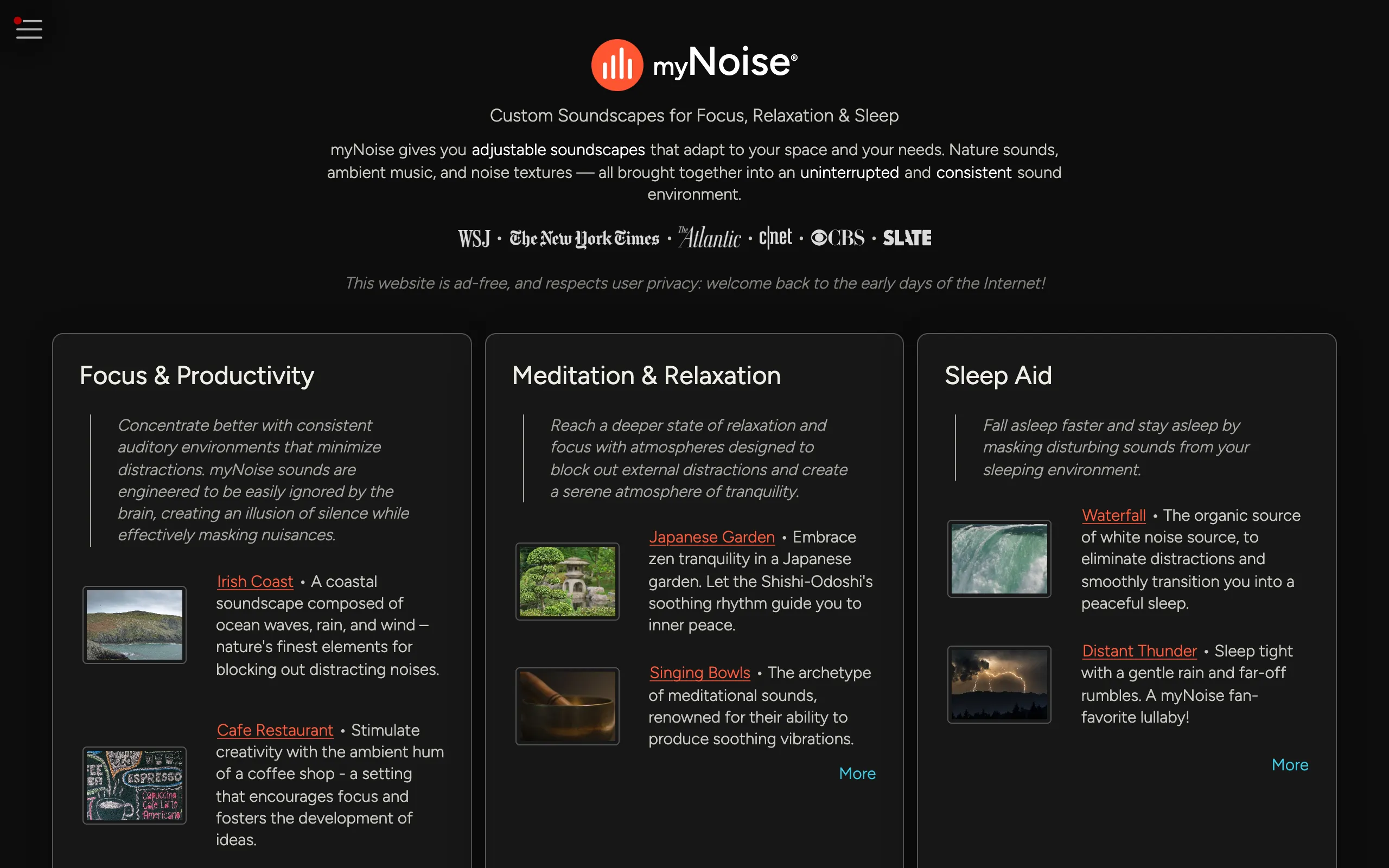
Price: Free on the web (donation-based); the apps are a one-time unlock
myNoise is a passion project by audio engineer Stéphane Pigeon, and it shows. The site offers hundreds of meticulously recorded and calibrated sound generators - from Japanese gardens to Gregorian chants to synthesizer drones. Each generator has adjustable frequency sliders and dozens of presets.
What it does well:
- Hundreds of incredibly high-quality sound generators
- Deeply customizable - adjust individual frequency bands
- Free in the browser
- The calibration feature adjusts for your hearing profile
Where it falls short:
- The interface is functional but dated
- Overwhelming number of options
- No music - only ambient and noise generators
- No focus sessions, timer, or tracking
Bottom line: If you care about audio quality and don't want to pay anything, myNoise is unbeatable. It takes more setup than focus.music, and it's sound generation, not music.
7. Spotify or YouTube playlists - the obvious option
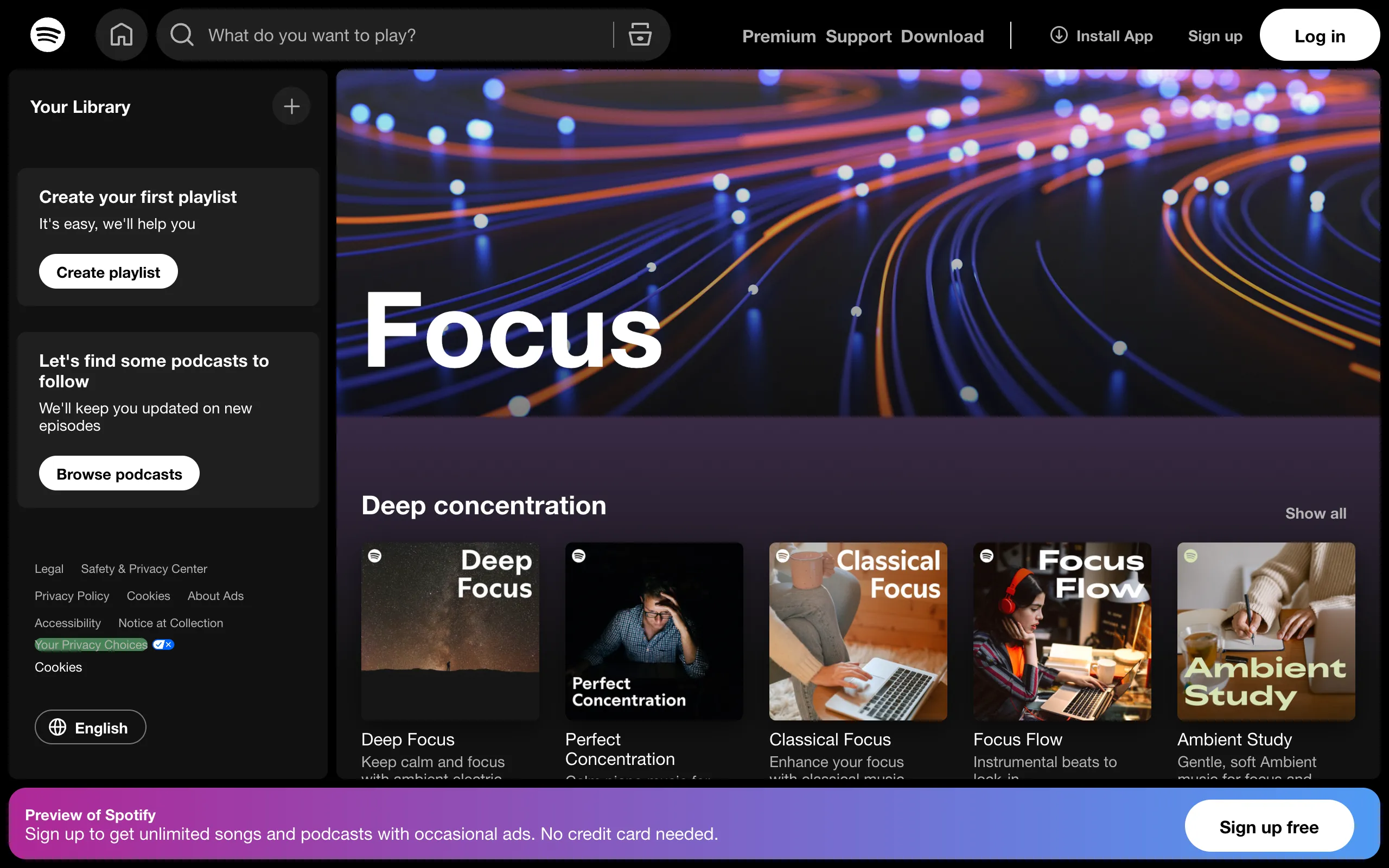
Price: Free with ads, or $12.99/month for Spotify Premium
Before paying for a dedicated focus app, it's worth asking whether a "Deep Focus" playlist does the job. Streaming platforms have massive catalogs of instrumental and ambient music, and you may already pay for one.
What it does well:
- You probably already have it
- Enormous music libraries with every genre
- Community-curated playlists (some are excellent)
- Works on every device
Where it falls short:
- Nothing is designed for focus beyond the playlist title
- Static playlists tend to fade into the background over time
- Shuffle can serve up distracting tracks, and ads on free tiers break focus
- It's easy to spend more time browsing than working
Bottom line: If you find a playlist you stick with, Spotify works fine. If you keep skipping tracks, a dedicated app is worth trying. We wrote a longer take on Omix vs Spotify if you're on the fence.
How to choose
The right focus.music alternative depends on why you're switching:
- You want composed focus music with more research behind it: Brain.fm, if the higher price is fine.
- You want music that responds to how you work: Omix adapts to your keyboard and mouse activity in real time. Best if your deep work happens at a desk. (It also works well for ADHD focus.)
- You want one app for focus, relaxation, and sleep on every device: Endel, which also has a free edition.
- You prefer ambient sound to music: myNoise is free and the quality is unmatched. Noisli is simpler.
- You liked the timed sessions most: Flocus pairs a timer and task list with background sounds.
- You don't want to pay anything: NSDR.co, myNoise, or a Spotify playlist.
Thinking about making the switch? Try Omix free for 7 days - no credit card required. Lifetime access is $119 while the founder's deal lasts.
Ready to boost your focus?
Try Omix free and discover adaptive focus music that responds to how you work.